What Your Trees Aren’t Telling You: Spotting Problems Before Damage Appears
Trees are the silent, steadfast giants of our landscapes. They provide shade, beauty, and a sense of permanence to our properties. But while they may seem self-sufficient, trees are living organisms susceptible to stress, disease, and pests. Unfortunately, they can't speak up when something is wrong. By the time obvious signs of major damage appear—like large dead limbs or a sudden lean—the underlying problem may have been festering for years, making recovery difficult and expensive.
The key to a long, healthy life for your trees is proactive observation. Learning to read the subtle signals your trees send can help you catch issues early, preventing minor problems from escalating into hazardous and costly situations. Here at Perfection Tree Specialist, we believe that an educated homeowner is a tree's best friend. This comprehensive guide will teach you how to perform a head-to-toe health check on your trees, empowering you to spot problems before significant damage occurs.
Why Early Detection is the Root of Tree Health
Ignoring the early warning signs of tree distress is a gamble. A sick or structurally unsound tree is not just an aesthetic issue; it's a liability. Here’s why catching problems early is so critical:
- Safety First: A compromised tree is a hazard. Weakened branches can fall unexpectedly, posing a serious risk to your home, vehicles, and family. Early intervention can mitigate these dangers before they become emergencies.
- Cost-Effectiveness: Treating a minor pest infestation or a small patch of decay is far more affordable than extensive pruning, complex treatments, or emergency tree removal. Proactive care saves you significant money in the long run.
- Preservation of Value: Healthy, mature trees can increase your property value by up to 15%. Protecting this asset through regular check-ups is a wise investment.
- Higher Chance of Recovery: Just like with human health, early diagnosis and treatment dramatically increase the chances of a full recovery. Waiting too long can mean the difference between saving a beloved tree and having to remove it.
A Head-to-Toe Inspection: Reading the Signs from Canopy to Roots
To properly assess your tree's health, you need a systematic approach. We recommend a 'head-to-toe' inspection, starting from the highest leaves and working your way down to the roots. Grab a pair of binoculars for a closer look at the canopy, and perform this check at least twice a year—once in late spring after the leaves have fully developed, and again in early fall.
1. The Canopy: A View from the Top
The leaves and upper branches are often the first place to show signs of stress.
- Leaf Discoloration: Are the leaves yellowing (chlorosis), browning at the edges, or showing unusual spots? While some seasonal change is normal, premature discoloration can indicate nutrient deficiencies, water stress, or disease.
- Thinning Canopy: Look up through the branches. Can you see significantly more sky than you used to? A sparse or thinning canopy is a classic sign of decline.
- Dieback: Pay close attention to the very top of the tree. Are there small, dead twigs and branches? This phenomenon, known as dieback, often signals root problems or systemic stress.
- Stunted or Deformed Growth: New leaves or twigs that are unusually small, misshapen, or clustered together can be a symptom of pest activity, herbicide damage, or a viral infection.
2. The Trunk & Bark: The Tree's Armor
The trunk provides the structural support and vascular system for the entire tree. Its bark is the protective armor.
- Cracks and Cankers: Deep vertical cracks can be caused by weather (frost cracks) but may also indicate internal decay. Cankers—sunken areas of dead bark—are often caused by fungal or bacterial infections that have killed the underlying tissue.
- Peeling or Flaking Bark: While some trees, like birches or sycamores, naturally shed their bark, unusual peeling on other species can be a sign of trouble.
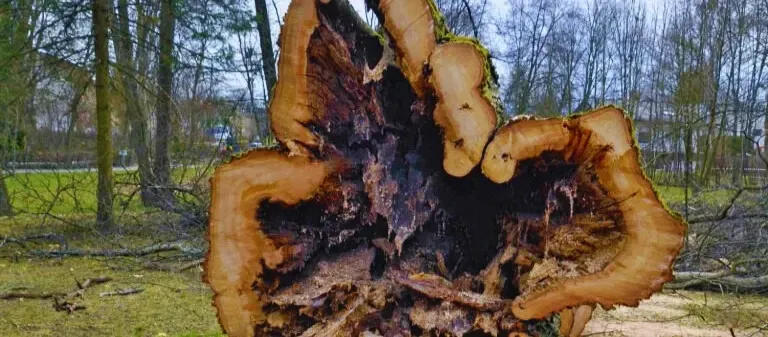
- Fungal Growth: The presence of mushrooms or other fungal bodies on the trunk or major limbs is a major red flag. Mushrooms are the reproductive part of a fungus, and their appearance often means that a significant amount of internal decay is already present.
- Holes and Oozing: Small, unexplained holes could be the work of boring insects. Any liquid oozing from the bark, whether clear or dark, warrants a closer look as it can signal infection or severe stress.
3. The Base & Roots: The Foundation of Life
What happens below ground is just as important as what happens above.
- Heaving Soil and Exposed Roots: Soil mounding or cracking around the base of the tree can indicate that it is starting to uproot. A tree that is leaning, especially with heaving soil on the opposite side, is an immediate hazard.
- Mushrooms at the Base: Fungi growing on the soil at the base of the tree or on surface roots are a strong indicator of root rot. Decaying roots compromise the tree's stability and its ability to absorb water and nutrients.
- Root Flare Issues: The spot where the trunk widens and transitions into the root system is called the root flare. It should be visible at the soil line. If it's buried under excess soil or mulch ('volcano mulching'), it can lead to girdling roots and decay.
- Construction Damage: Have you had any recent construction, digging, or heavy equipment on your property? Soil compaction and root damage from construction are leading causes of tree decline, though symptoms may not appear for several years.
Common Culprits: A Quick Guide to Pests & Diseases
Identifying the specific cause of a tree's decline can be tricky, but knowing some common culprits can help. For a full list of our treatment options, please see our main services page.
| Problem | Common Signs | Trees Often Affected |
|---|---|---|
| Emerald Ash Borer | D-shaped exit holes, thinning canopy, vertical bark splits. | Ash trees |
| Anthracnose | Dark, sunken lesions on leaves, stems, and twigs. Premature leaf drop. | Sycamore, Oak, Maple, Dogwood |
| Powdery Mildew | White, powdery spots on leaves and stems. | Lilac, Dogwood, Maple |
| Root Rot | Thinning canopy, poor growth, mushrooms at the base, leaf discoloration. | Many species, especially in poorly drained soil. |
When to Call a Professional Arborist
While regular observation is something every homeowner can do, diagnosis and treatment are best left to the experts. If your inspection reveals any of the major warning signs—particularly leaning, large dead branches, or fungal growth on the trunk—it's time to call a certified arborist.
A professional arborist has the training and equipment to safely assess the situation, accurately diagnose the problem, and recommend a course of action. At Perfection Tree Specialist, our team is dedicated to preserving the health and beauty of your trees. We understand the complex biology of trees and can provide services ranging from soil treatments and pest management to expert pruning and, when necessary, safe removal. You can learn more about our philosophy and team on our About Us page.
Conclusion: Be Your Tree's Best Advocate
Your trees are a vital part of your home's ecosystem and value. By learning their language of subtle signs and signals, you can move from a reactive to a proactive approach to their care. Regular, mindful inspections allow you to become your tree's best advocate, ensuring it receives the attention it needs to thrive for generations. Don't wait for a problem to become a catastrophe. Start observing today, and when in doubt, trust the professionals to help you protect your green investment.
If you've noticed any of these warning signs or have concerns about the health of your trees, don't hesitate to reach out. Contact Perfection Tree Specialist today for a professional consultation.
Frequently Asked Questions
How often should I inspect my trees?
A thorough inspection should be done at least twice a year, ideally in late spring/early summer when leaves are fully out, and again in the fall as they begin to change color. It's also wise to check them after major storms for any new damage.
Are mushrooms growing on my tree always a bad sign?
Yes, mushrooms growing directly on the trunk, branches, or major roots are almost always a sign of significant internal decay. The mushroom is just the 'fruit' of a much larger fungal network decaying the wood. This is a serious condition that requires immediate professional assessment.
Can a tree with significant problems be saved?
It depends on the type and extent of the problem. Trees are resilient, and many issues like nutrient deficiencies, certain diseases, or minor pest infestations can be managed effectively if caught early. However, widespread structural decay or advanced root rot may mean the tree is beyond saving and has become a hazard requiring removal.
What is the difference between dieback and normal seasonal changes?
Seasonal changes, like leaves changing color in the fall, happen uniformly across the tree. Dieback is typically more erratic, affecting the tips of branches, often at the very top of the tree (the crown), while other parts of the tree may still appear healthy. Dieback results in dead, leafless branches during the growing season.
Why is 'volcano mulching' bad for my tree?
Piling mulch high against the trunk of a tree, resembling a volcano, is a common but harmful practice. It traps moisture against the bark, promoting decay and fungal growth. It can also hide the root flare, encouraging girdling roots that can choke the tree over time. Mulch should be applied in a donut shape, 2-3 inches deep, keeping it away from the trunk itself.